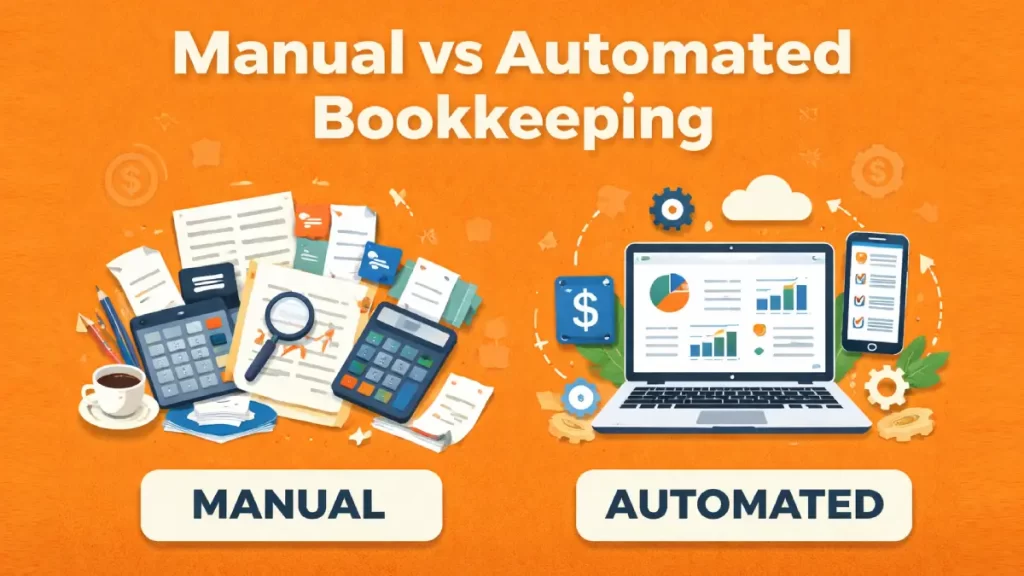
In most cases, the end-of-year period is the worst period for many businesses. Finance departments stay up through the night to reconcile the books and make the reports. Everything is slackened with manual processes. Mistakes are made, and time limits are out of the question. The auditors are interested in accuracy, and the management in quick numbers. This pressure usually results in hasty decision-making and risk of compliance. These are problems that are solved by automating year-end accounts. It assists businesses that are in the closure phase become more precise and remain in the compliance phase without a sense of panic.
What is Year-End Account Automation?
Year-end account automation refers to applying technology to do accounting with the least amount of manual labor. Rather than having to go through transactions manually, software of this nature conducts reconciliations, reporting, and validations automatically. It processes data through artificial intelligence, robotic process automation, and optical character recognition. Automation is directly related to accounting software such as Tally, SAP B1, or other ERP software. This enables businesses to leave the last-minute closing to the year-round accounting.
Why Businesses Are Moving Away From Manual Year-End Closing
Closing of the year-end with manual methods takes weeks and, in some cases, months. Spreadsheets, emails, and manual calculations are relied upon by accountants. A little error may impact the whole financial statement. Entry checking is very difficult due to high volumes of transactions. Late data submissions and missing invoices are associated with risk. Lack of complete records makes compliance more difficult. Such delays and risks are unacceptable in business nowadays. Automation assists in saving time and minimizing errors in financial data, which enhances trust in the information.
Key Areas to Automate for Faster Financial Close
Bank Reconciliation and Transactions
Bank reconciliation is a process that is most time-consuming when it comes to the end of the year. Automated tools compare bank transactions to the ledger in real time. High-volume accounts are balanced in a few minutes. Unparalleled entries are brought out in a clear way. This ensures that there is no need to search manually and that errors are minimized. The speed of bank reconciliation increases the general financial close process.
Intercompany Accounting
Firms that have more than one branch or entity have problems with intercompany accounting. Transactions between parties are not usually identical. The automation is done through the reconciliation of these transactions by robotic process automation. It automatically does elimination adjustments and validations. This enhances precision and minimizes conflicts among in-house organizations. Closing across companies is made more efficient and secure.
Accounts Payable and Accounts Receivable
Another significant issue at the end of the year is invoice processing. Invoices and receipts are scanned by automation through optical character recognition. The information is automatically extracted and compared with purchase orders and payments. This minimizes the errors of manual entries. Duplicate invoices are detected with ease. Collections and payments are done with precision. This enhances the visibility of cash and the acceleration of account closing.
Journal Entries and Adjustments
Automation can be done in recurring journal entries, like depreciation and accruals. Adjustments made through the rule minimise manual calculations. Approval processes are involved in checking and balancing. Automation eliminates the need to use spreadsheets and night shifts. The journal entries are made uniform and mistake-free.
Financial Reporting and Statements
Financial statements can be generated instantly with the help of automation. Balance sheet, profit and loss, trial balance, and cash flow reports are built automatically. Real-time reports are provided as opposed to end-of-day. The management obtains quicker decision-making insights. There is an increased accuracy in reporting.
How Automation Improves Compliance and Accuracy
Continuous Closing Approach
Automation enables continuous closing instead of year end rush. Reconciliations and adjustments are done monthly. Errors are detected early. Workload is distributed across the year. Finance teams feel less pressure during year-end. Businesses stay prepared at all times.
One Hundred Percent Transaction Coverage
Automated systems review every transaction. No entry is missed. Accounting rules are applied consistently. This improves data accuracy and reduces compliance risk. Businesses gain confidence in their financial numbers.
Audit Ready Systems
Automation creates a complete audit trail for every transaction. Supporting documents are linked digitally. Auditors can access data easily. Audit time reduces significantly. Businesses face fewer audit queries and lower audit costs.
Regulatory and Tax Compliance
Automated tax calculations reduce errors in filings. Regulatory reports such as XBRL are generated automatically. Deadlines are met on time. The risk of penalties and non-compliance reduces. Compliance becomes a smooth process.
Role of ERP and Accounting Software in Year-End Automation
- Modern ERP systems help automate complex accounting tasks easily
- Integration with software like Tally SAP B1 Oracle and NetSuite ensures smooth data flow
- All financial data stays centralized in one secure system
- Manual data entry and duplicate work are reduced
- Automated dashboards show real-time financial status
- Finance leaders can track closing progress and business performance easily
- Reports are generated faster with better accuracy
Best Practices for Implementing Year-End Account Automation
- Start automation planning early instead of waiting for year-end
- Implement systems gradually to avoid disruption
- Test processes before full-scale implementation
- Standardize accounting procedures using common checklists and templates
- Ensure timely data sharing across all departments
- Encourage coordination between finance, sales, procurement, and HR teams
- Select tools based on business size and future growth
- Focus on strong data security and system scalability
Challenges in Automation and How to Overcome Them
- Team resistance may occur due to fear of new technology
- Proper training helps employees gain confidence
- Poor data quality can affect automation results
- Cleaning and organizing data improves accuracy
- Legacy system integration can be complex
- Planning reduces integration issues
- With the right strategy automation challenges can be managed smoothly
Future of Year-End Accounting Automation
The future of accounting is real-time and predictive. Artificial intelligence will detect risks automatically. Compliance monitoring will happen continuously. Finance teams will focus more on strategy and growth. Automation will become a basic requirement, not a choice.
Conclusion
Automating year-end accounts transforms the entire financial close process. Businesses close books faster, improve accuracy, and stay compliant with ease. Manual stress and errors are reduced significantly. Finance teams gain time for strategic work. Automation builds trust in financial data and supports better decisions. If your business wants faster close, better compliance, and future-ready finance, now is the right time to start your automation journey.