Closing the financial year has always been a stressful task for many businesses. Finance teams rush to complete records. Business owners wait weeks for final numbers. Mistakes show up at the last moment.
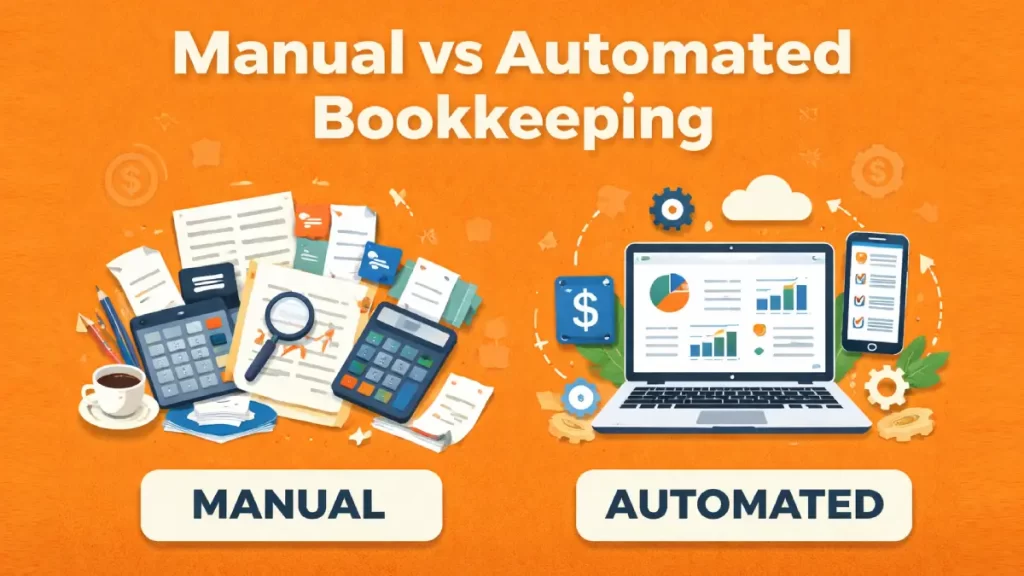
This usually happens because businesses still follow traditional accounting methods. Real time management accounts change this completely by offering continuous and automated financial visibility throughout the year.
What Are Real Time Management Accounts?
Real time management accounts are financial reports that update continuously as business transactions happen. Sales expenses payments and receipts are recorded instantly using accounting systems.
Instead of waiting for month end or year end businesses can view accurate profit cash flow and financial position at any time. These reports help business owners make informed decisions based on current data rather than old figures.
How Real Time Management Accounts Work
Real time accounting is powered by cloud technology and automation. Financial data flows automatically from different systems into one place.
Key elements include:
- Continuous transaction recording through cloud accounting software
- Automated bank feeds that update balances regularly
- Integration with invoicing payroll and expense tools
- Live dashboards showing profit loss balance sheet and cash flow
Problems With Traditional Financial Year Closing
Traditional year end closing relies heavily on delayed and manual processes. This causes several challenges.
Common issues include:
- There is no recording of important transactions in good time resulting in gaps and unreliable financial reports.
- The entry errors committed by humans lead to calculation problems, inappropriate figures, and financial inferences.
- At the end of the year, teams are in a hurry to secure a similar record, which puts additional pressure, mistakes, and work.
- Paper-based or disorganized records delay the audit process and raise the chances of compliance problems.
How Real-Time Management Accounts Simplify Year-End Close
With real-time management accounts, financial reconciliation happens throughout the year. Errors are identified early and corrected immediately. By the time the financial year ends, most of the work is already done.
Year-end closing becomes faster, smoother, and more predictable. In many cases, businesses reduce closing time by thirty percent or more.
Key Benefits of Real-Time Management Accounts
The advantages of real-time accounting go beyond faster closing. Major benefits include:
- Records are already up-to-date, and the financial year-end process is faster, smoother, and less stressful.
- Automation will decrease the number of manual entries, which will limit errors and enhance the accuracy of financial data in general.
- Businesses are able to monitor any cash flow in and out without any surprise, and thereby enhance planning.
- Managers make timely decisions based on up-to-date financial information rather than depending on reports.
- Revised and alphabetized records enhance quicker, simpler, and regulations-compliant audits.
Continuous Close Model Explained
The continuous close model replaces the traditional closed-door month-end approach. Instead of waiting until the end of the period, teams reconcile accounts regularly.
This model works by:
- Reconciling bank accounts daily or weekly
- Reviewing transactions continuously
- Spreading workload evenly across the year
- Turning year end close into a final review
This reduces pressure and improves financial discipline.
Role of Technology and Automation
Technology is the backbone of real time management accounts. Cloud based accounting platforms allow businesses to access data anytime and anywhere.
Automation helps by:
- Recording transactions automatically
- Matching bank transactions accurately
- Reducing human errors
- Presenting data through simple dashboards
Even non finance teams can understand financial performance easily.
Who Should Use Real Time Management Accounts
Real time management accounts are suitable for many types of businesses.
They are ideal for:
- Small and medium sized businesses
- Startups and growing companies
- Businesses with high transaction volumes
- Owners who want full financial visibility
Any business looking to reduce year end stress can benefit from this approach.
How to Implement Real Time Management Accounts
Implementing real time accounting requires planning and the right tools.
Key steps include:
- Selecting a cloud based accounting system
- Standardizing accounting workflows
- Connecting bank payroll and invoicing systems
- Training teams on real time reporting
- Working closely with accountants
Once implemented this system becomes part of daily operations.
The Future of Financial Year Closing
The future of accounting is non-stop, automated, and open. Companies are abandoning reactive reporting in favor of real-time financial reporting. This change enables the firms to remain flexible and competitive within a rapidly-evolving setting.
Conclusion
A smarter manner of closing financial years is by real-time management accounts. These eliminate the panic at the end of the day, enhance precision, and offer financial clarity on an annual basis.
The adoption of real-time accounting will enable businesses to close their financial years at a quicker pace, make superior choices about their business, and regulate their finances in a more robust manner.
It is high time to eliminate the conservative approach and adopt real-time management accountability to achieve long-term success and financial transparency.